
Introduction
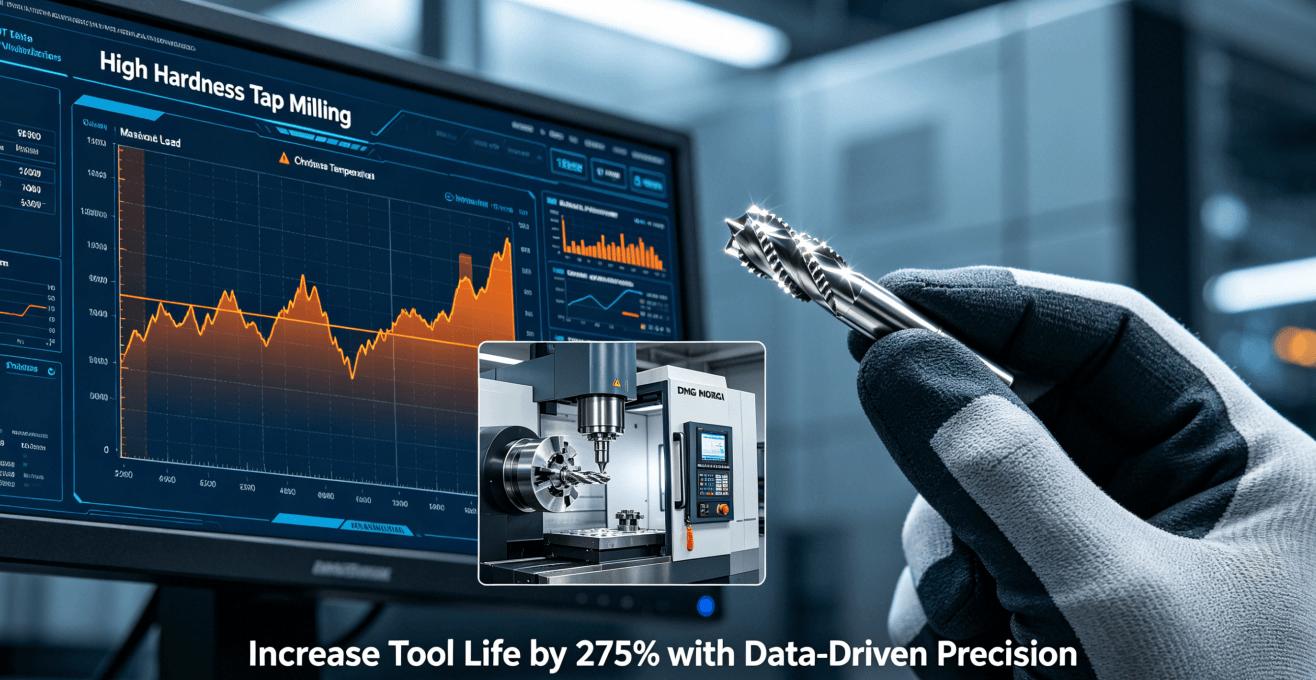
In premium manufacturing industries such as automobiles and aircrafts, thread machining on extremely hard materials (such as steels above 62 HRC) is a major problem because of the early and unexpected breakdown of the Thread Cutting Tap Milling Tool. This causes unexpected halts in manufacturing operations and rising costs. Conventional techniques of grinding can also lead to overheating problems, which worsens the problem even further. The fundamental cause of this is the inability to control heat buildup, the deformation of microstructures during processing, and improper parameter settings for the material.This article explores the integration of Smart Factory LOT systems with advanced Precision CNC Milling technology. By enabling real-time data acquisition, analysis, and feedback control, this fusion allows for the precise management of the entire tool manufacturing process, yielding stable production of highly durable High Hardness Tooling Solutions. The following five key areas reveal how this technological synergy fundamentally reshapes efficient and reliable tool manufacturing.
How Does Smart Factory LOT Monitor and Warn Against Thermal Damage Risks in Tap Milling in Real-Time?
In High Hardness CNC Milling, heat is the invisible enemy of tool life. Uncontrolled temperatures during the Precision Thread Milling of a tap flute can anneal the base material or cause grinding burns, creating micro-cracks that lead to catastrophic failure in use. The Smart Factory LOT ecosystem addresses this by transforming the machine tool into a data node. Sensors, such as thermocouples embedded near the cutting zone and power monitors on the spindle, are integrated directly onto the CNC Milling Services equipment. These sensors constantly feed information regarding the load of the spindle, temperature of machining, and vibration levels to the platform.
Such a system is not limited to mere observation but involves preventive action. Using the analytical capabilities of the data platform with historic and current analysis, it becomes possible to define the “healthy” thermal footprint for a given geometry of the tool along with the batch of the particular materials used. When operating, the system is able to recognize if there is any abnormal heating pattern observed which could be due to either excessive wear of the tool, insufficient cooling, or inadequate parameters. As an extension, in a closed-loop system, adjustments could be made with regards to flow of coolant and feed rates to reduce heat generation.
In the Manufacturing of Ultra-Fine-Diameter Taps (Below M3), How Does CNC Milling Overcome Deflection Issues Unsolvable by Traditional Processes?
The manufacture of micro-taps with small diameters (less than M3) constitutes one of the greatest difficulties associated with precision machining technology. With their fragile structure and thin walls, such taps are very sensitive to deformation and vibrations that may lead to loss of accuracy and uneven cutting of the threads.
The Shortcoming of Rigid Traditional Techniques
Traditional techniques cannot ensure sufficient stability for machining micro-tools due to their flexibility, which results in chatter and inaccuracies on the surface, and does not allow one to meet the requirements of sub-micron precision necessary for producing micro-diameter taps.
Advanced CNC Strategies for Micro-Tool Fabrication
Modern CNC Milling For Tooling employs a multi-faceted, precision-driven approach to overcome these physical limitations.
- Synchronized Tailstock Support Systems:
To combat workpiece flexure, specialized fixtures with live, synchronized tailstocks are used. This provides full-length support to the tap blank, drastically increasing dynamic rigidity and damping vibrations throughout the machining process.
- Trochoidal Milling and Micro-Diameter Tools:
Instead of conventional full-width cuts, Precision CNC Milling utilizes trochoidal (circular) toolpaths. This technique allows a small-diameter end mill to engage the material with a constant, minimal radial cut, reducing cutting forces by over 60% compared to traditional paths. This is essential for preventing the tool from “pushing” the slender workpiece away.
Achieving Sub-Micron Consistency
By combining mechanical stabilization with intelligent toolpath programming, the microscopic deflection during machining is controlled to a sub-micron level. This ensures perfect consistency in the thread profile’s lead, angle, and form across the entire batch. For manufacturers seeking such capabilities, partnering with a specialist offering advanced CNC Tap Milling Services is crucial to accessing this level of technology. A resource like this blog on CNC Tap Milling Services provides deeper technical insights.
Why is 5-Axis Precision Milling the Only Choice for Reproducing Complex Flute Geometry and Optimizing Chip Evacuation?
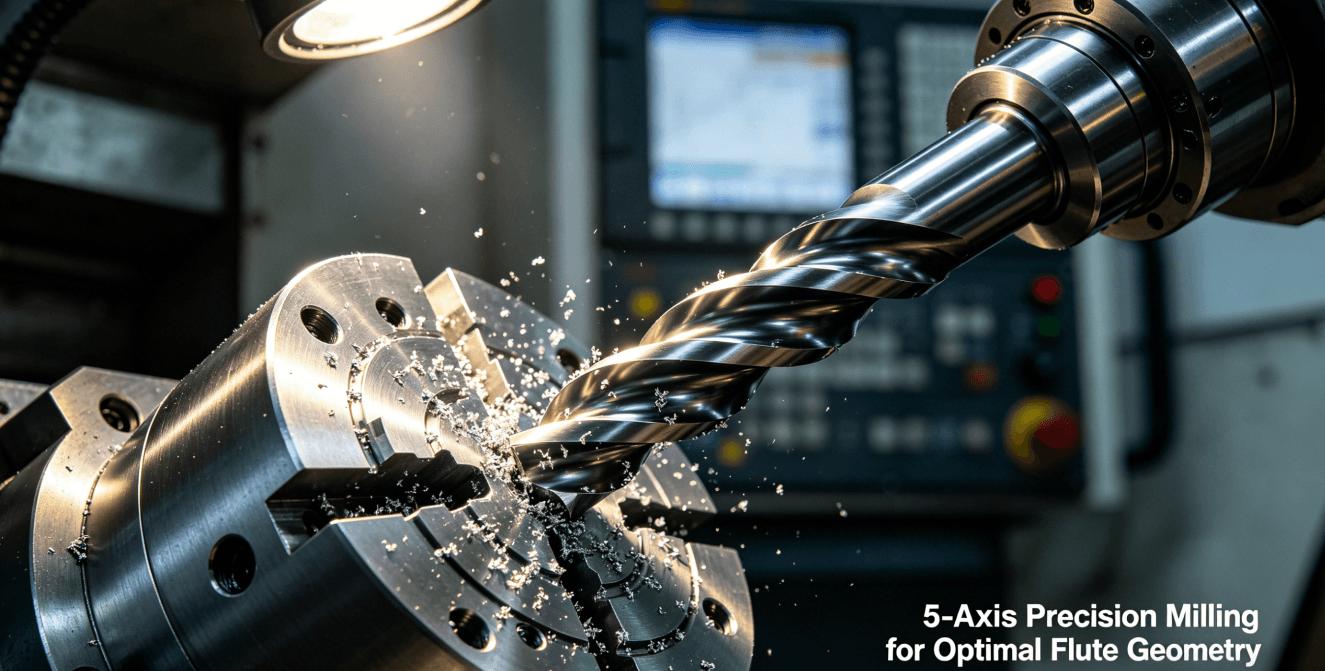
The geometry of a tap’s flute (chip evacuation channel) is not a simple groove; it is a complex, three-dimensional helical surface with often variable helix angles. This design is critical for controlling chip formation, flow, and evacuation, which directly determines cutting performance, tap life, and thread quality.
Multi-axis Precision Thread Milling is uniquely suited for this task. Unlike traditional methods that require multiple setups or simplified geometries, 5-axis CNC Milling Services allow the cutting tool to maintain an optimal orientation relative to the complex flute surface at all points along the path. The tool can approach the workpiece from the perfect angle, enabling continuous, synchronized motion along multiple axes to mill the designed 3D surface in a single, uninterrupted operation.
This capability is fundamental for creating the ideal flute. It allows for the accurate reproduction of specialized designs, such as flutes with a high spiral angle for efficient chip ejection in blind holes or variable geometries that prevent chip packing. The result is a flute with a superior surface finish (low Ra value) and a smooth, optimized path for chips to exit. This level of geometric freedom and precision is why Precision CNC Milling For Thread Cutting Taps has become the standard for manufacturing high-performance, long-life tools, as it directly translates to more reliable cutting action and fewer breakages in production.
From Prototype to Production: How Does the Digital Process Guarantee Extreme Precision for Every Medical-Grade Micro-Tap?
To attain and, more crucially, sustain such an extremely high level of precision, as is required of medical-grade micro-taps (Ra values less than 0.2µm with micrometer tolerances), is no small task in terms of consistency.
The solution lies in a fully digital, closed-loop workflow. It begins with a digital twin of the tap in the CAM software, where the machining process is simulated and optimized before any metal is cut, ensuring flawless G-code generation. The true differentiator is closed-loop in-process quality control. During production, a touch probe integrated into the Precision CNC Milling machine performs on-machine measurement of critical features like thread pitch diameter and form. This real-time data is fed back into the Smart Factory LOT platform.
The data obtained is compared with the nominal values of the digital twin. In case there is a tendency towards the development of wear in the tool observed (i.e., there is a tiny deviation from its size), the LOT system could adjust the parameters of the toolpath for the following part via the automatic sending of the required offset to the CNC machine. In this way, the thousandth part produced will be exactly the same as the first one. Every part can be associated with its specific machine data, tool wear compensation records, and inspection results, which is essential for compliance with stringent quality standards like ISO 13485, a certification that providers of High Hardness Tooling Solutions must often hold.
Facing Mass Customization Demands, How Can CNC Milling Services Shorten Lead Times by 70%?
The traditional model for custom tap manufacturing, reliant on designing and fabricating dedicated form-grinding wheels, creates a bottleneck. For non-standard or custom geometry orders, the long lead time for wheel preparation makes rapid response to urgent production needs, like a breakdown in an automotive assembly line, virtually impossible.
The Cost and Lead Time Bottleneck
Traditional custom tap production is heavily reliant on specialized grinding wheels. For unique designs, especially in low-volume or prototype scenarios, the entire project timeline and cost are dominated by the fabrication of this single-use physical tooling, making small batches economically unviable.
The Agile Digital Solution
CNC Milling For Tooling eliminates this dependency, enabling a software-driven paradigm.
- Software-Defined Flexibility:
The tool geometry exists solely in the CAM program. Switching designs requires only a software change, allowing a standard machine to produce countless variations instantly.
- Unmatched Responsiveness:
With large cnc milling services, a broken special tap triggers a rapid response. From receiving a CAD file to producing certified replacements takes days, not weeks. This agility provides critical supply chain resilience for industries like automotive.
Conclusion
The integration of Smart Factory LOT with advanced Precision Manufacturing Services is no longer a future concept but a present-day solution to the core pains of high-hardness, high-precision tool manufacturing. Such synergy ensures that there will be levels of transparency and adaptability that could not have been previously achieved in such operations as Thread Cutting Tap Milling. The benefits that one can reap from such an approach include increased tool longevity, decreased unplanned down times, reduced risks of low quality and reduced costs of operation. For businesses facing the problem of ineffective machining of hard materials and high rates of tool usage, a new look at the tool chain is essential.
Author Bio
This article was contributed by a precision manufacturing engineer with over 15 years of experience, whose expertise spans from CNC Milling Services to smart factory systems integration. Dedicated to advancing digital manufacturing solutions at LS Manufacturing, the engineer helps global clients overcome their most complex machining challenges.
H2:FAQs
Q: Isn’t the implementation of Smart Factory LOT system very expensive and complicated?
A:Modern technology allows for a modular installation. Collecting data right off the bat from critical machinery will make initial investment acceptable. Return on investment, achieved via minimizing scrap, eliminating downtime, and optimizing tool usage, normally results in unexpectedly quick ROI.
Q: Can we consider CNC milling of taps economical in small batch, high mix manufacturing operations?
A:CNC milling is very economical. CNC allows skipping the expense and delay of grinding wheel development. Digital programming allows for quick changes between designs, making it excellent for prototypes, small batch custom manufacturing, and Maintenance, Repair & Overhaul (MRO) situations.
Q: What can we do to ensure that precise tools provided by external vendors will comply with our internal quality management system?
A:Choose vendors certified according to the required international standard (IATF 16949 (automotive industry), AS9100D (aerospace) or ISO 13485 (medical)). Require them to supply full documentation, including a First Article Inspection Report (FAIR), material certification, and total process inspection records.
Q: In addition to taps, is the LOT+Precision Milling model appropriate for other custom-made tools?
A: Indeed, the same LOT+Precision Milling system works perfectly well for producing high-precision end mills, drills, reamers, and form tools. Any custom tool that requires a combination of hard metals, intricate geometries, and consistent results will greatly benefit from this technique.
Q: Would precision-milled taps require any specific cutting parameters in an already functioning machine center?
A: Taps designed for high performance generally have optimal parameters suggested. Some adjustments to speed, feed rate, and cooling are usually required, but the resulting tool durability and part accuracy will certainly justify such an optimization process.