
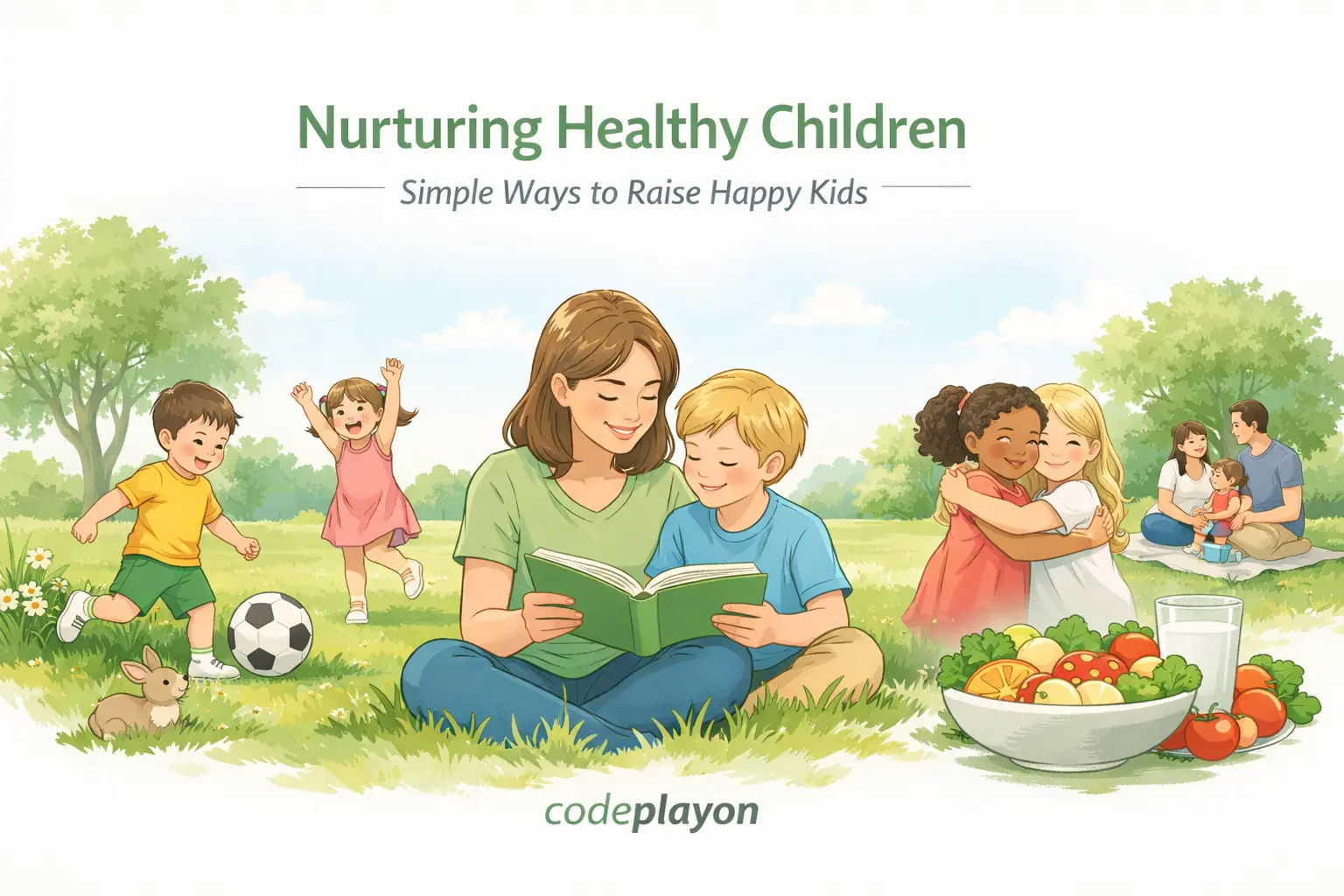
Nurturing healthy children means helping children grow in a balanced and caring way—not only in their bodies, but also in their minds, emotions, and relationships. Many people think child health is only about good food and doctor visits. In reality, it goes much deeper than that.
When we talk about nurturing healthy children, we are talking about daily care, emotional support, guidance, and consistency. It is about how children feel at home, how safe they feel expressing themselves, and how supported they are when they make mistakes or try something new.
A healthy child is not just one who rarely falls sick. A healthy child is one who:
-
Feels loved and accepted
-
Is confident enough to ask questions
-
Can express emotions without fear
-
Has energy to play, learn, and explore
Nurturing is different from simply raising a child. Raising often focuses on rules, discipline, and results. Nurturing focuses on connection, patience, and growth. It means being present, listening carefully, and guiding children instead of controlling them.
“Children are not things to be molded, but people to be unfolded.”
— Jess Lair
Nurturing Healthy Children Is a Holistic Process
Healthy development happens when physical health, emotional safety, mental growth, and social learning work together. If one area is ignored, it affects the others.
| Area of Health | What It Includes | Why It Matters |
|---|---|---|
| Physical Health | Nutrition, sleep, movement | Builds strength and immunity |
| Emotional Health | Love, security, expression | Supports confidence and resilience |
| Mental Health | Learning, curiosity, focus | Helps thinking and problem-solving |
| Social Health | Relationships, behavior | Builds communication and empathy |
For example, a child who eats well but feels ignored emotionally may struggle with confidence. A child who feels loved but lacks routine may find it hard to focus or feel secure. This is why nurturing healthy children requires balance, not perfection.
Nurturing Starts Earlier Than Most People Think
Many habits that shape adult health begin in early childhood. The way a child is spoken to, comforted, and guided becomes the foundation for how they handle stress, relationships, and challenges later in life.
Simple moments matter:
-
A parent listening without interrupting
-
A calm response instead of shouting
-
Encouragement instead of comparison
These everyday actions slowly build a child’s inner strength.
A Simple Way to Think About Nurturing Healthy Children
You can think of nurturing like watering a plant. The plant needs:
-
Water (care and love)
-
Sunlight (guidance and learning)
-
Strong soil (a safe environment)
Without any one of these, growth becomes difficult.
Nurturing healthy children does not mean being perfect parents or caregivers. It means being consistent, kind, and willing to learn along the way. Children do not need flawless adults. They need adults who care enough to try.
2. Why Nurturing Healthy Children Is More Important Than Ever
Today’s children are growing up in a very different world than previous generations. Life is faster, schedules are tighter, and screens are everywhere. Because of this, nurturing healthy children has become more important than ever, not less.
Many children now spend more time indoors than outside. Physical play is often replaced by phones or tablets. At the same time, academic pressure starts very early. All of this can affect a child’s body, emotions, and behavior if not balanced with care and support.
Children today face challenges such as:
-
Less physical movement
-
Higher exposure to screens
-
Reduced family time
-
Increased stress at a young age
When these factors are not managed properly, they can lead to problems like poor sleep, low confidence, emotional outbursts, or difficulty focusing. This does not mean modern life is bad. It simply means children need more conscious nurturing than before.
Nurturing healthy children helps them build inner strength. A nurtured child learns how to cope with change, handle disappointment, and stay calm under pressure. These skills do not come naturally. They are learned through daily experiences with caring adults.
Parents and caregivers who focus on nurturing are not just helping children today. They are shaping healthier adults for tomorrow.
3. Physical Health Foundations for Nurturing Healthy Children
Physical health is the base of everything else. When children feel physically well, they are more open to learning, playing, and connecting with others. Nurturing healthy children always starts with caring for the body, but it should be done in a simple and stress-free way.
Good physical health is not about strict rules or perfect meals. It is about regular habits that support growth.
Important physical health pillars include:
-
Nutritious food
-
Daily movement
-
Proper sleep
-
Basic hygiene and care
Nutrition That Supports Growth
Children do not need fancy diets. They need balanced, regular meals that include fruits, vegetables, grains, proteins, and healthy fats. Eating together as a family also plays a big role. It helps children build a positive relationship with food.
Instead of forcing children to eat, gentle encouragement works better. When food is not turned into a battle, children naturally develop healthier eating habits.
Movement and Play
Play is not extra. Play is essential. Running, jumping, climbing, and even simple games help children strengthen their muscles and bones. Physical play also improves mood and sleep.
Children who move daily often:
-
Sleep better
-
Feel less restless
-
Have better focus
Sleep and Routine
Sleep is one of the most ignored parts of nurturing healthy children. A tired child may appear stubborn or emotional, but often they just need rest. Fixed sleep routines help children feel safe and calm.
| Age Group | Average Sleep Needed |
|---|---|
| Toddlers | 11–14 hours |
| Preschoolers | 10–13 hours |
| School-age children | 9–12 hours |
Good sleep supports immunity, growth, and emotional balance.
4. Emotional Well-Being: The Heart of Nurturing Healthy Children
Emotional health is at the core of nurturing healthy children. A child who feels emotionally safe is more likely to explore, learn, and trust others.
Children experience emotions just as deeply as adults, but they do not always know how to express them. Anger, fear, jealousy, and sadness are normal. What matters is how adults respond to these emotions.
When caregivers listen calmly and take feelings seriously, children learn that emotions are not something to hide.
How Emotional Nurturing Helps Children
Emotionally nurtured children often:
-
Feel confident sharing their thoughts
-
Recover faster from stress
-
Show empathy toward others
A simple habit like naming emotions helps a lot. Saying “I see you’re upset” or “It’s okay to feel angry” teaches children that feelings are normal and manageable.
“Children need to feel safe before they can learn.”
Emotional well-being grows when children know they are loved even when they make mistakes. Discipline should guide, not shame. This builds trust and emotional strength.
5. Mental and Cognitive Development in Healthy Children
Mental growth is another key part of nurturing healthy children. This includes thinking skills, curiosity, memory, and problem-solving. Children learn best when learning feels natural and enjoyable.
Play-based learning is especially powerful. When children play, they experiment, imagine, and discover. These moments help the brain grow without pressure.
Supporting Mental Growth at Home
You do not need special tools. Simple activities help a lot:
-
Reading together
-
Asking open-ended questions
-
Letting children solve small problems
Screen time should be limited but not feared. When used wisely, digital tools can support learning. The key is balance. Offline activities should always come first.
Children who are mentally nurtured are not just good at exams. They are curious, confident, and willing to try new things.
6. Social Skills and Behavior: Raising Confident, Kind Children
Social development teaches children how to live with others. Sharing, listening, cooperating, and respecting boundaries are learned over time. Nurturing healthy children includes guiding them through social situations, not expecting perfection.
Children learn social behavior mainly by watching adults. When they see kindness, patience, and honesty, they copy it.
Healthy social development helps children:
-
Make friends
-
Handle conflicts calmly
-
Communicate their needs
Mistakes are part of learning. When children struggle socially, gentle guidance works better than punishment. Talking through situations helps children understand their actions.
7. Creating a Safe and Supportive Environment for Children
A supportive environment gives children a sense of stability. Routines, clear expectations, and calm communication help children feel secure.
Safety is not only physical. Emotional safety matters just as much. Children should feel free to ask questions, make mistakes, and express themselves without fear.
A nurturing environment includes:
-
Predictable daily routines
-
Clear but kind boundaries
-
Respectful communication
Consistency helps children trust their surroundings. When children know what to expect, they feel more relaxed and confident.
8. Simple Daily Habits That Support Nurturing Healthy Children
Nurturing healthy children does not require big changes. Small daily habits create the strongest impact over time.
Some powerful daily habits include:
-
Spending a few minutes of focused time with your child
-
Listening without distractions
-
Encouraging effort instead of results
Even short moments of connection build emotional strength.
A Simple Daily Check-In
Ask yourself:
-
Did my child feel heard today?
-
Did I respond calmly when things went wrong?
-
Did we share at least one positive moment?
These small actions shape long-term health more than any single rule or method.
Conclusion: Growing Healthy Children, One Day at a Time
Nurturing healthy children is not about being perfect. It is about being present, patient, and caring. Children grow best when they feel supported in their bodies, minds, and hearts.
When adults focus on nurturing instead of controlling, children grow into confident, kind, and balanced individuals. The effort you put in today becomes the foundation for their future well-being.
Healthy children are not raised in one day. They are nurtured slowly, lovingly, and consistently—one day at a time.